
Orthodontics · Alcantarilla, Murcia
Clear aligners. In Alcantarilla.
Moving teeth. Caring for the whole.
Aligners are part of the treatment. We start by understanding your smile, your bite and the health of the tissues supporting your teeth.
01 / Start with you
What concerns you. What we assess.
One tooth may be your concern. To understand how to move it, we need to consider the whole picture.
When space is limited.
Teeth can overlap or rotate. Before planning movements, we assess the available space, tooth positions and gum health.
The important question
How can teeth be aligned within their limits?
When there are gaps.
The size and distribution of gaps matter, along with their cause and how the teeth meet. We assess the whole picture before considering whether and how to close them.
The important question
What explains those gaps, and what are the options?
How teeth meet matters too.
Orthodontics also considers the relationship between upper and lower teeth. An assessment helps us understand their contacts and which movements may be appropriate for your case.
The important question
What happens when you close your mouth?
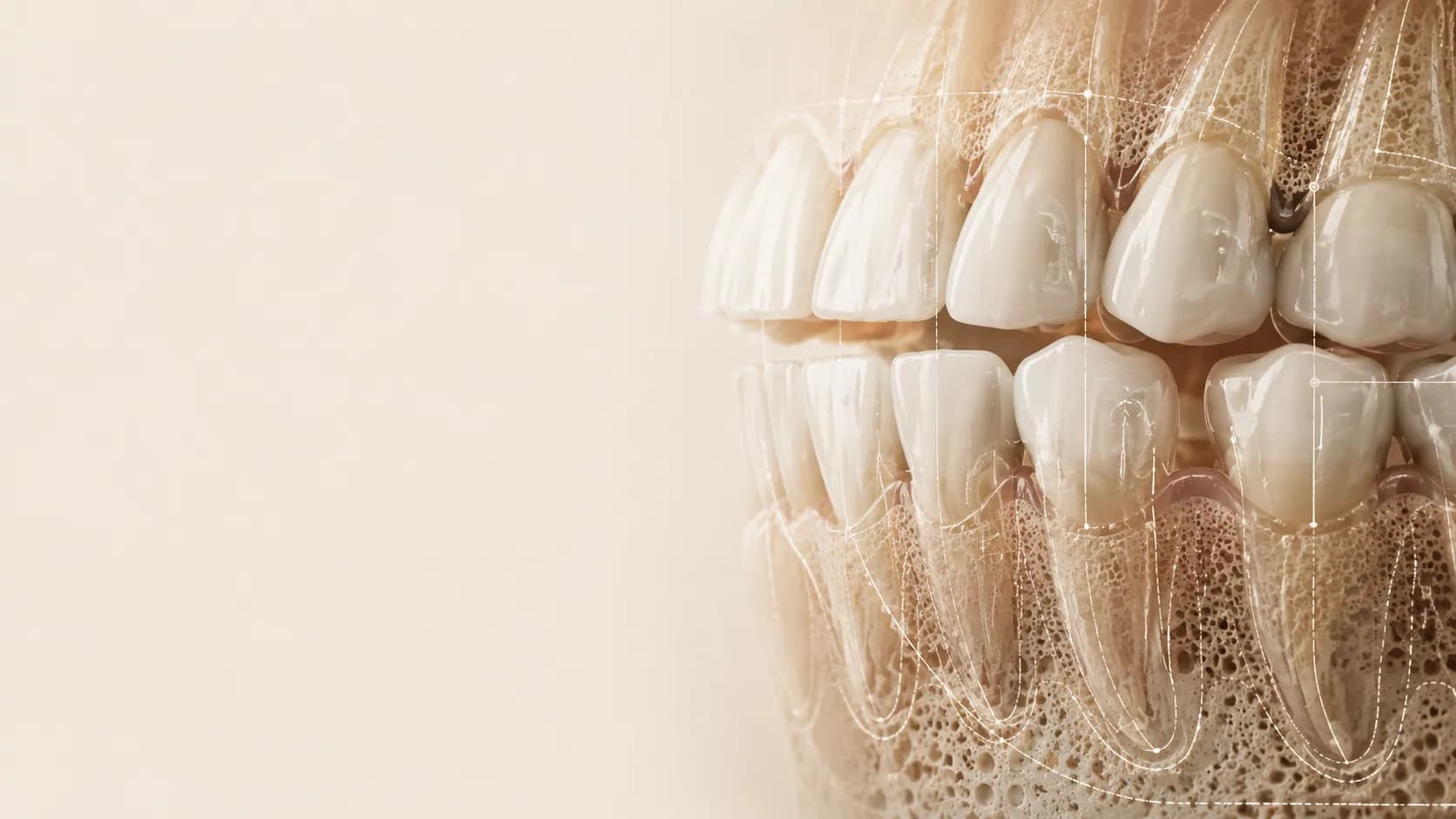
These drawings help explain the ideas. Your diagnosis requires a clinical assessment.
02 / Understand before moving
What you cannot see matters too.
We assess teeth, roots, gums and bite to consider movements appropriate to your situation. Planning begins with a clinical assessment and the records your case requires.
Imaging is recommended individually. When justified, a CBCT scan can provide three-dimensional information for planning.
How intraoral scanning records your teethListen
Your concerns and what you hope to achieve.
Assess
Tooth positions, supporting tissues and how your teeth meet.
Explain
The options, their limits and the proposed stages.

03 / Treatment with ongoing care
Discreet. With your commitment.
Aligners are removed for meals and cleaning. Wear and changes follow an individual schedule. Follow-up allows us to review how treatment is progressing.
Wear
We explain wear time and how to follow your prescribed sequence.
Cleaning
Caring for your teeth and aligners is part of treatment.
Follow-up
Reviews allow us to check the fit and consider whether the plan needs adjustment.
04 / Care for what you achieve
The last aligner is not the end.
Teeth can change position over time. Retention helps maintain alignment and forms part of treatment, with instructions and reviews tailored to you.
Finish the movement
Review the treatment outcome.
Maintain the position
Agree the type of retention and how to use it.
Continue caring
Review retainers and your oral health.
Before you begin
Your questions are part of the process.
Are aligners suitable for every case?
Different movements and situations need different approaches. An assessment helps establish whether aligners are suitable, whether additional support is needed or whether another option should be considered.
Can I have treatment as an adult?
Orthodontics may also be considered for adults. Tooth and gum health, bite and goals need to be assessed before starting.
How long might treatment take?
Timing depends on your starting situation, the planned movements and progress. After the assessment, we can explain an estimate and the factors that may require changes to the plan.
Will I need attachments or additional adjustments?
Some cases use small tooth-coloured elements bonded to the teeth, called attachments, or other aids for particular movements. We explain what is proposed and why.
What if I have gum problems?
Periodontal health needs to be assessed before moving teeth. If there are problems, the team will explain how to address them and coordinate orthodontics with the care required.
What does the estimate include?
The assessment defines the proposed scope. We explain the items in the estimate, including the assessment, treatment, follow-up and retention proposed for your case.
General patient information
We start by understanding your smile.
Tell us what you would like to change. The first decision is to assess your case.